Associate Professor of Biology
Biological, Chemical, and Environmental Sciences
Education
Ph.D., Zoology: Stellenbosch University, Stellenbosch, Republic of South Africa (2015)
M.Sc., Biology: Hofstra University, Long Island, New York (2011)
B.S., Biology: St. John’s University, Queens, New York (2009)
About
Main Interests
I am a marine biologist with a strong focus on invasive invertebrates and the parasites which infect them. In particular, I am interested in understanding how human activities such as dam construction, aquaculture, shipping, etc. can influence the dispersal and subsequent evolution of aquatic invasive species. My lab uses a combination of tools to address this issue including DNA barcoding, population genetics, physiological experiments and biophysical modelling. In terms educational innovation, I have developed several pedagogical tools to create a more student-centric environment in the classroom which not only engages and challenges students but is also inclusive and utilizes real-world applications.
Other Interests
When I am not in the lab or the classroom, I am an avid martial artist and actively practice a variety of disciplines including Brazilian Jiu Jitsu (my primary focus), Kudo (mixed martial arts with a gi) and Iaido (a specialized form of Japanese swordsmanship that involves the drawing and sheathing of the katana). I have an eclectic taste in music and enjoy anything from Scandinavian death metal to late 90s-early 2000s hip hop to jazz. I am a horror-movie fanatic, a short-story writer (mostly horror) and enjoy travels to central and eastern Europe.
Publications
Peer-reviewed publications
*undergraduate co-author **graduate co-author
53. Davinack A.A. (2026) HapNet: a new python package for automated population-aware haplotype network analysis and visualization. Mitochondrial DNA Part A https://doi.org/10.1080/24701394.2026.2705539
52. Davinack A.A., *Seaberg R.A. (2026) pygenoscape: a Python package for spatial interpolation and visualization of genetic distance landscapes. Bioinformatics Advances 6: vbag173
51. Davinack A.A., *Seaberg R. (2026) What does eDNA actually measure? Clarifying the conceptual foundations of molecular biodiversity surveys. Systematics and Biodiversity 24: 2684293.
50. Davinack A.A. (2026) Migration thresholds govern allele collapse under repeated gene flooding. Ecology and Evolution 16: e73740
49. Davinack A.A. (2026) Detection without establishment: limits of environmental DNA in highly connected port systems. Environmental DNA 8: e70311.
48. Davinack A.A., Williams J.D. (2026) From mud to mollusks: The evolutionary journey from sediment dwellers to shell-boring parasites in polydorid worms. In J. E. Byers, A. M. H. Blakeslee, & J. Wares (Eds.), The ecology and evolution of marine parasites and disease. Oxford University Press.
47. Davinack A.A., Fitzhugh K. (2026) Cryptic diversity does not justify weakening systematics standards. A comment on: ‘Adapting practices to accelerate the scientific description of invertebrate cryptic species’, (2025) by Vivien et al. Biology Letters 22: 20250652.
46. Davinack A.A., *Sheedy A.A., Srivastava, V., Parshad, R.D. (2026) Modeling seasonal variation of mud-blister worm infestation in oysters using a stage-structured ordinary differential equation framework. Ecological Modelling 515: 111530.
45. Davinack A.A. (2026) The limits of PCR-based diagnostics in parasitology. Trends in Parasitology 42: P219 – P221.
44. *Sheedy A., Davinack A.A. (2026) Seasonal dynamics of Polydora infestation in eastern oysters (Crassostrea virginica) from a tidally restricted New England estuary. Journal of Invertebrate Pathology 214: 108372
43. Davinack A.A. (2026) Diagnosability without gatekeeping in taxonomy: on the ‘Kaiserian shortfall.’ Bionomina 44: 020 – 022.
42. Davinack A.A. (2026) Questioning claims of parasite-induced sexual aggression in humans. Evolution and Human Behavior 47: 106836.
41. Davinack A.A. (2025) The double-edged sword of artificial intelligence in invasion biology. Biological Invasions 27: 230.
40. Davinack, A.A. (2025) The promise of quantum computing for population genetics and molecular ecology. Frontiers in Quantum Science and Technology 4: 1657832
39. Fowler, A., Blakeslee, A.M.H., Davinack A., Aguilar, R., Andersen, M., Benadon, C., Choong, H., Green-Gavrielidis, L., Greenberg, S.R., Hartshorn, E., Hobbs, N-V., Labbe, S., Larson, K., McCuller, M., Moloney, D.M., Parsons, S.K., Stancil, C., Thornber, C., Pederson, J., Carlton, J.T. (2025). Caribbean creep meets Chesapeake creep: marine bioinvasions and community shifts along the Mid-Atlantic coast, USA. Biological Invasions 27: 192.
38. Davinack A.A. *Varetto, I., *Grosser, C., and *Russo, E. (2025) First report of Proctoeces maculatus (Digenea: Fellodistomidae) infecting the ribbed mussel, Geukensia demissa: detection of a unique haplotype in New England, USA. Acta Parasitologica 70: 91.
37. Davinack A.A. (2025) Caution against using genetic diversity alone to determine native ranges of aquatic species: the persistence of an old problem. Aquatic Invasions 20: 175 – 179.
36. Davinack, A.A. (2025) Lowering barriers to coding: incorporating generative artificial intelligence to support data analysis in a biology class. The American Biology Teacher 87: 547 – 552.
35. *Titus, M., *Varetto, I., *Grosser C., *Russo E., and Davinack A.A. (2025) First molecular characterization of Proctoeces maculatus (Looss, 1901) (Digenea: Fellodistomidae) infecting blue mussels (Mytilus edulis) from the northeastern USA. Journal of Helminthology 99: e23.
34. Davinack A.A., Carlton J.T., and Pederson J. (2024) Annotated checklist and community composition of introduced, cryptogenic, and native polychaetes in floating dock communities of New England, USA. Journal of the Marine Biological Association of the United Kingdom 140: e103
33. **Abeyrathna W.A.N.U., and Davinack A.A. (2024). Genetic diversity and connectivity of the invasive gastropod, Callinina georgiana (Caenogastropoda: Viviparidae) across a fragmented riverscape: a mitonuclear perspective. Freshwater Biology 69: 1232- 1244.
32. Davinack A.A., *Strong, M., and Brennessel B. (2024). Worms on the Cape: an integrative survey of polydorid infestation in wild and cultivated oysters (Crassostrea virginica) from Massachusetts, USA. Aquaculture 581: 740366.
31. **Abeyrathna W.A.N.U., and Davinack A.A. (2023). A pilot study examining the lethality of niclosamide monohydrate on the invasive mystery snails, Callinina georgiana and Cipangopaludina japonica. Management of Biological Invasions 14: 659 – 670.
30. Davinack A.A. (2023) Can ChatGPT be leveraged for taxonomic investigations? Potential and limitations of a new technology. Zootaxa 5270: 347 – 350.
29. **Abeyrathna W.A.N.U., *Barreto A., Sanders S.H., and Davinack A.A. (2023). First genetically confirmed report of the Japanese mystery snail, Heterogen japonica (Martens, 1861) from California more than a century after its first introduction. BioInvasions Records 12: 501 – 511.
28. Sindičić M., Davinack A.A., Bujanić M., Bugarski D., Mirčeta J., Ferroglio E., and Konjević D. (2023). A new insight into genetic structure of Danube and Italian foci of fascioloidosis. Veterinary Parasitology 314: 109854.
27. Davinack A.A., and Hill L. (2022) Infestation of wild bay scallops on Nantucket Island by the shell boring polychaete, Polydora neocaeca. Diseases of Aquatic Organisms 151: 123 – 128.
26. Davinack A.A. (2022) Towards a more inclusive and diverse invasion biology workforce. BioInvasions Records 11: 307 – 311.
25. David A.A. (2021) Climate change and shell-boring polychaetes (Annelida: Spionidae): current state of knowledge and the need for more experimental research. Biological Bulletin 241: 4 – 15 [invited review]
24. *O’Leary E., *Jojo D., and David A.A. (2021) Another mystery snail in the Adirondacks: DNA barcoding reveals the first record of Sinotaia cf. quadrata (Caenogastropoda: Viviparidae) from North America. American Malacological Bulletin 38: 1 – 5.
23. David A.A., Williams J.D., and Simon C.A. (2021) A new cryptogenic Dipolydora species (Annelida: Spionidae) in South Africa. Journal of the Marine Biological Association of the United Kingdom 101: 271 – 278.
22. Pederson, J., Carlton, J.T., Bastidas, C., David, A., Grady, S., Green-Gavrielidis, L., Hobbs, N-V., Kennedy, C., Knack, J., McCuller, M., O’Brien, B., Osborne, K., Pankey, S., and Trott, T. (2021). 2019 Rapid Assessment Survey of marine bioinvasions of southern New England and New York, USA, with an overview of new records and range expansions. BioInvasions Records 10: 227 – 237.
21. David A.A. (2021) Introducing Python programming into Undergraduate Biology. The American Biology Teacher 83: 33 – 41.
20. *Parker A., and David A.A. (2021) Genetic characterization of the giant liver fluke, Fascioloides magna (Platyhelminthes: Fascioloidae) from the Adirondack region of northern New York. Acta Parasitologica 66: 259 – 263.
19. David A.A. (2020) Oyster reef restoration and biological invasions: an overlooked or a non-issue? Frontiers in Marine Science 7: 544691
18. David A.A., *Pettit L., and *Edmund M. (2020) Resilience of a highly invasive freshwater gastropod, Viviparus georgianus (Mollusca: Viviparidae) to CO2-induced acidification. Journal of Molluscan Studies 86: 259 – 262.
17. David A.A., and *Cahill J. (2020) Tri-oceanic connectivity of the supposedly cosmopolitan polychaete, Harmothoe imbricata (Annelida: Polynoidae): insights from the COI marker. Marine Biology Research 16: 256 – 264.
16. David A.A., and *Cote S. (2019) Genetic evidence confirms the presence of the Japanese mystery snail, Cipangopaludina japonica (von Martens, 1861) (Caenogastropoda: Viviparidae) in northern New York. BioInvasions Records 8: 793 – 803.
15. David A.A., and *Krick M. (2019) DNA barcoding of polychaetes collected during the 2018 Rapid Assessment Survey of floating dock communities from New England. Marine Biology Research 15: 317 – 324.
14. David A.A., and Janáč, M. (2018). Twenty-year anniversary of the ICAIS: progress and challenges towards a better understanding of aquatic invasions. Aquatic Invasions 13: 433-437.
13. David A.A. (2018). Reconsidering panmixia: the erosion of phylogeographic barriers due to anthropogenic transport and the incorporation of biophysical models as a solution. Frontiers in Marine Science 5, 280.
12. *Pickett T., and David A.A. (2018) Global connectivity patterns of the notoriously invasive mussel, Mytilus galloprovincialis Lmk using archived CO1 sequence data. BMC Research Notes 11: 231.
11. David A.A. (2018) Using project-based learning to teach phylogenetic reconstruction for advanced undergraduate biology students: Molluscan evolution as a case study. The American Biology Teacher 80: 278-284.
10. David A.A., and Loveday B.R. (2018). The role of cryptic dispersal in shaping connectivity patterns of marine populations in a changing world. Journal of the Marine Biological Association of the United Kingdom 98: 647 – 655.
9. David A.A., and *Gardner K. (2017) Repurposing of archived CO1 sequence data reveals unusually high genetic structure between North American and European zebra mussels (Dreissena polymorpha). Mitochondrial DNA Part B 2: 853 – 855.
8. David A.A., Lewis A., *Yhann A., *Zhou H., and *Verra S. (2017) DNA barcoding of the banded mystery snail, Viviparus georgianus (Gastropoda: Viviparidae) in the Adirondacks with quantification of trematode prevalence in the species. American Malacological Bulletin 35: 175 – 180.
7. David A.A. (2017) A student-centered approach for teaching undergraduate Parasitology. Trends in Parasitology 33: 420 – 423. [invited article]
6. David A.A., and Matthee C.A., Loveday B.R., Simon C.A. (2016). Predicting the dispersal potential of an invasive polychaete pest along a complex coastal biome. Integrative and Comparative Biology 56: 600 – 610.
5. David A.A., and Williams, J.D. (2016) The influence of hypo-osmotic stress on the regenerative capacity of the invasive polychaete, Marenzelleria viridis (Annelida: Spionidae) from its native range. Marine Ecology 37: 821-830
4. David A.A., and Simon C.A. (2014) The effect of temperature on larval development of two non-indigenous poecilogonous polychaetes (Annelida: Spionidae) with implications for life history, establishment and range expansion. Journal of Experimental Marine Biology and Ecology 461: 20-30.
3. David A.A., Matthee C.A., and Simon C.A. (2014) Poecilogony in Polydora hoplura (Polycheata: Spionidae) from commercially important molluscs in South Africa. Marine Biology 161: 887-898.
2. David A.A., and Williams J.D. (2012). Morphology and natural history of the cryptogenic sponge associate, Polydora colonia (Polychaeta: Spionidae). Journal of Natural History 46: 1509-1528.
1. David A.A., and Williams J.D. (2012). Asexual reproduction and anterior regeneration under high and low temperatures in the sponge associate Polydora colonia (Polychaeta: Spionidae). Invertebrate Reproduction and Development 56: 315-324.
Technical Reports
Neffinger A.J., Pappal, A.L., Bastidas, C., Brandler, K., Carlton, J.T., Choong, H.H.C., Davinack, A., Dijkstra, J.A., Duffey, S., Fernekees Hartshorn, E., Glon, H., Goddard, J.H.R., Grady, S., Harris, L.G., Hobbs, N.V., Kuba, G.M., Lambert, W., Lupo, A., Lynch, A., McCuller, M., Miller, J., O’Brien, B., Osborne, K., Pederson, J.A., Rotondo, J., Thornber, C., Trott, T., Webb, A. (2025) 2023 Rapid Assessment Survey: Non-Native, Native, and Cryptogenic Marine Species at Maine and Massachusetts Marinas. Commonwealth of Massachusetts, Executive Office of Energy and Environmental Affairs, Office of Coastal Zone Management, Boston, MA. 51 pp.
Kennedy C, A.L. Pappal, C. Bastidas, J.T. Carlton, A. A. David, J.A. Dijkstra, S. Duffey, J. Gibson, S.P. Grady, L.A. Green-Gavrielidis, L.G. Harris, N.-V. Hobbs, A. Mauk, M. McCuller, C.Neefus, B. O’Brien, K. Osborne, J.A. Pederson, J. Robidoux, M. Tyler, and K. Van Volkom. 2020. Report on the 2018 Rapid Assessment Survey of Introduced, Cryptogenic, and Native Marine Species at New England Marinas: Massachusetts to Maine. Commonwealth of Massachusetts, Executive Office of Energy and Environmental Affairs, Office of Coastal Zone Management, Boston, MA. 30 pp. [Technical Report]
Popular media articles
Assessment Is Ruining Teaching. The Chronicle of Higher Education. February 13, 2026. https://www.chronicle.com/article/assessment-is-ruining-teaching
When nature isn’t a gift: A biologist’s take on the service berry. Skeptical Inquirer. October 15, 2025. https://skepticalinquirer.org/exclusive/when-nature-isnt-a-gift-a-biologists-take-on-the-serviceberry/
Parasitic worms in your shellfish lead a creepy but popular lifestyle. The Conversation. January 29, 2020. https://theconversation.com/parasitic-worms-in-your-shellfish-lead-a-creepy-but-popular-lifestyle-138405
Teaching Interests
Courses
- BIO 114: Introduction to Biology
- BIO 200: Research Experience (DNA Barcoding)
- BIO 241: Biological Data Analysis
- BIO 298: Principles of Parasitology
- BIO 372: Ecology of Infectious Diseases
- BIO 398: Invertebrate Zoology
- BIO 211: Genetics
- BIO 317: Molecular Ecology & Evolution (Lecture and Lab) (OER Textbook for course)
- BIO 401: Senior Seminar: Artificial Intelligence in the BioSciences
Current student projects
CURRENT RESEARCH STUDENTS
23. Charlotte Daniels – Investigating parasite-mediated microplastic sequestration in Mytilus edulis from New England. [BIO 500 Honors Thesis]
22. Emma Leeuwenburgh – Assessing intergenomic variability in the terminal regions of the MPX virus: a preliminary investigation. [BIO 500 Honors Thesis]
PAST RESEARCH STUDENTS
21. Rylie Seaberg – Comparative phylogeography of three nematode parasites with contrasting life cycles [BIO 500 Honors Thesis]
20. Talia Dalton – Cross-Species Transcriptomic Alignment of Retinal Cell Types in Mouse, Chicken, and Zebrafish Following Injury [BIO 500 Honors Thesis] Collaboration with Mount Desert Island Biological Laboratory
19. Caroline Kelley – Global mtDNA population structure of killer whales (Orcinus orca) using archived genomic datasets.
18. Sean Pugsley – Assessing the efficacy of Mebendazole on mortality of the shell-boring parasite Polydora websteri from eastern oysters. [WOSS Pre-Frosh Scholar]
17. Belle Huynh – Assessing the efficacy of Mebendazole on mortality on polydorid mortality from eastern oysters. [WOSS Pre-Frosh Scholar]
16. Emma Russo – Genetic characterization of the trematode parasite Proctoeces maculatus from New England blue mussels (Mytilus edulis). [BIO 399: Independent Study]
15. Ava Sheedy – Parasite load of Polydora worms in the eastern oyster from an anthropogenically disturbed estuary in Cape Cod. [BIO 500 Honors Thesis]
14. Hannah Brunelle – Assessing impacts of multiple parasites on Striped Bass (Morone saxatilis) across age classes and rivers in the Chesapeake Bay. [BIO 500 Honors Thesis] Collaboration with Smithsonian Environmental Research Center
13. Isabel Varetto – Genetic characterization and quantification of Proctoeces maculatus infecting Mytilus edulis from three marinas in New England. [WOSS Pre-Frosh Scholar]
12. Cam Grosser – Genetic characterization of trematodes infecting Mytilus edulis from New England. [WOSS Pre-Frosh Scholar]
11. Ophelia McGrail – Unraveling a potential cryptic species complex of Polydora colonia and Polydora spongicola through morphology and DNA barcoding. [BIO 500 Honors Thesis]
10. Katie Vidic – DNA barcoding of parasitic worms extracted from the invasive Japanese mystery snail Heterogen japonica. [BIO 399 Independent Study]
9. Margaret Strong – Population genetics of shell-boring worms associated with the oyster, Crassostrea virginica from Wellfleet Harbor, Cape Cod. [BIO 399 Independent Study]
8. Eric Galindo – Genetic diversity of Dirofilaria immitis variants from globally segregated populations [BIO 399 Independent Study]
7. Maia Ondrasenek – Genetic connectivity of Dirofilaria immitis variants from globally segregated populations
6. Ashley Barreto – DNA barcoding of the Japanese mystery snail (Heterogen japonica) from California.
5. Mikayla Titus – Prevalence and DNA barcoding of trematode parasites associated with the blue mussel, Mytilus edulis from Point Judith, Rhode Island [BIO 499: Capstone Project].
4. Ava Sheedy – DNA barcoding of Hydroides dianthus from New England marinas [BIO 399: Independent Study].
3. Rachel Hickey – DNA barcoding of terebellid worms from the mid-Atlantic region of the United States [BIO 399: Independent Study]
2. Viviana Schroeder – Genetic characterization of the southern pine beetle from Nantucket Island. [BIO 399: Independent Study]
1. Trisha Harithsa: Phylogeographic position of Mytilus edulis based on historical samples collected from the Baltic Sea (Poland). [BIO 399: Independent Study]
Research Interests
My research focuses on the ecology, evolution, and systematics of marine invertebrates, with particular emphasis on parasite-host interactions, marine invasions, and biodiversity genetics. I use molecular ecology, phylogeography, DNA barcoding, population genomics, and computational approaches to investigate how parasites and symbionts shape ecological and evolutionary processes in coastal marine systems. Much of my work centers on shell-boring polychaete worms that infect commercially important mollusks, including oysters, and on the broader role of cryptic, parasitic, and invasive organisms in structuring marine biodiversity. My lab also integrates undergraduate researchers into projects involving field ecology, molecular taxonomy, bioinformatics, and the development of computational tools for biodiversity science.
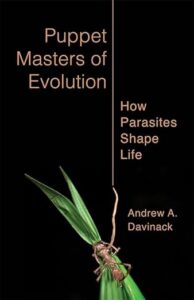
Front cover of upcoming popular science book, Puppet Masters of Evolution: How Parasites Shape Life. The book will explore the far-reaching and often underappreciated role parasites play in shaping not only ecosystems and host immune systems but also their role in the development and evolution of life on our planet.
In addition, I work with talented undergraduate Bioinformatics majors to develop Python packages for biodiversity genomics for e.g.:
pygenoscape : pygenoscape is a Python package for generating spatially explicit visualizations of genetic structure from pairwise genetic distance matrices and geographic coordinates.

Hapnet: A Python package for building and visualizing population-aware haplotype networks.